Article -> Article Details
| Title | Why Your Portable Cabin in Gujarat Fails in Extreme Heat and How to Fix Insulation Issues |
|---|---|
| Category | Business --> Business Services |
| Meta Keywords | Portable cabin in Gujarat |
| Owner | Perfect Portable Cabins |
| Description | |
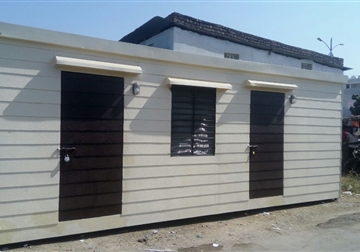
When the Walls Start Working Against YouGujarat summers are serious. Temperatures in Ahmedabad, Surat, and Vadodara regularly cross 42°C, and inside a poorly insulated portable structure, it can feel even worse. If you own a site office, guard cabin, or storage unit that turns into an oven by 11 AM, you already know what I'm talking about. The real problem is not just discomfort. A worker who spends eight hours in a cabin that never cools down is less productive, more prone to mistakes, and more likely to leave. For a construction company running a long project, that adds up. Here is where many buyers who invested in Portable cabin in Gujarat sites discover they made the wrong choice — they picked price over insulation spec.
Why Most Portable Cabins Struggle in Gujarat's ClimateThe two biggest culprits are the roof and the wall sandwich panels. Most entry-level portable cabins use single-skin or thin-profile panels. These work fine in Pune or Bengaluru. In Gujarat, where summer sun beats down for 10+ hours a day on a flat metal roof, they fail fast. The metal absorbs heat, holds it, and radiates it inward for hours after the sun goes down. Cheap insulation materials like thin thermocol or low-density PUF (polyurethane foam) lose effectiveness quickly in sustained heat. You might get a decent first summer. By the second or third, the foam has compressed or cracked and the cabin runs warmer than ever. There is also the installation factor. Even good panels lose a lot of their value if the joints are not sealed properly. Gaps around doors, vents, and cable entry points are invisible to the eye but brutal in terms of heat gain. What Good Insulation Actually Looks LikeThe standard to look for is high-density PUF panels with a minimum thickness of 60mm for walls and 75mm to 100mm for the roof. The roof takes the most direct sun, so cutting corners there is a mistake. Aluminium foil lining on the inside of roof panels reflects radiant heat before it can transfer into the room. Combined with proper PUF density, this can drop interior temperatures by 8–12°C compared to an uninsulated equivalent. Ventilation placement matters too. Cross-ventilation — meaning vents or openings on opposite walls — lets hot air exit rather than sit. A cabin with only one side open collects heat like a sealed box. If you are retrofitting an existing cabin, the most cost-effective fix is usually replacing or insulating the roof panel first, then sealing all joints with foam filler or weatherstrip tape. Common Mistakes People Make When Buying in GujaratBuying based on square footage and price alone. A 10x12 cabin at a lower cost might have thinner panels, and you will spend the difference on electricity for a portable AC unit within one summer. Not asking about panel density. Vendors will say "insulated" as a selling point without specifying the PUF density or thickness. Ask for it in writing. Ignoring orientation. Where the cabin faces on-site matters. A long wall facing west gets four to five hours of direct afternoon sun. If you have a choice, orient the cabin so the smaller wall faces west. Skipping a false ceiling. Even a simple false ceiling with air gap creates a buffer layer between the hot roof and the interior. It is inexpensive and makes a noticeable difference. Why Choose Perfect Portable CabinsThe company builds cabins specifically for Indian climate conditions, not generic specs sourced from colder climates. Every unit uses high-density PUF panels, and the roof specifications are designed for sites in Rajasthan and Gujarat where heat load is at its worst. There is no bait-and-switch on specifications. What the quote says is what gets delivered. The fabrication is done in-house, which means quality control is consistent and lead times do not depend on third-party suppliers. For buyers who have already got a cabin that is underperforming, the team can inspect and recommend retrofit solutions — often without needing to replace the whole unit. ConclusionA poorly insulated portable cabin in Gujarat is not just uncomfortable — it costs money every single day through productivity loss and energy bills. The fix usually starts with understanding what your current panels are made of and where the heat is actually getting in. Buying right the first time is cheaper than fixing it later. If you are evaluating options or already dealing with a cabin that runs too hot, Perfect Portable Cabins is worth talking to before you make a decision you will regret by May. FAQsWhat PUF density should a portable cabin have for Gujarat summers? For Gujarat, look for PUF insulation with a density of at least 38–42 kg/m³. Anything below that will compress faster and lose insulating performance within a few seasons. Can I add insulation to a portable cabin I already own? Yes. The most practical options are adding a false ceiling with insulation board, applying a reflective roof coating on the exterior, and sealing all panel joints with weatherstrip foam. Replacing the roof panel alone often solves 60–70% of the heat problem. How much cooler can a well-insulated portable cabin be compared to a basic one? In direct Gujarat summer conditions, a properly insulated cabin with 75mm roof panels and foil lining typically runs 8–12°C cooler than a single-skin or low-density cabin without any supplemental cooling. Does the direction my cabin faces on-site affect heat buildup? It does. Avoid placing the larger wall face to the west. Afternoon sun from the west is the most intense heat load. If the site layout forces a west-facing wall, that wall needs extra insulation or exterior shading. What is the lifespan of PUF insulation in high-heat conditions? Good-quality high-density PUF in a well-sealed cabin can last 10–15 years without significant degradation. Cheap, low-density foam in a hot, humid climate may start losing effectiveness in 3–5 years. | |